
Lesson
Setting S.M.A.R.T. Goals
Summary
A goal without a plan is just a wish, and most wishes don't come with price tags. This lesson introduces the S.M.A.R.T. goal framework and connects it to real savings strategies so students can turn vague financial intentions into actionable plans.
Bellringer: Goal or Dream?
- Display the bellringer scenario and give students 1–2 minutes to reflect.
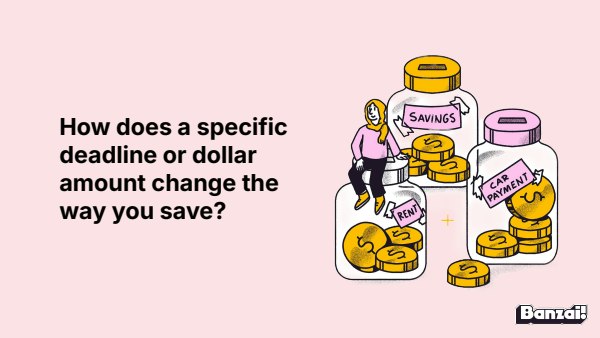
- Ask: How does a specific deadline or dollar amount change the way you save?
Instruction
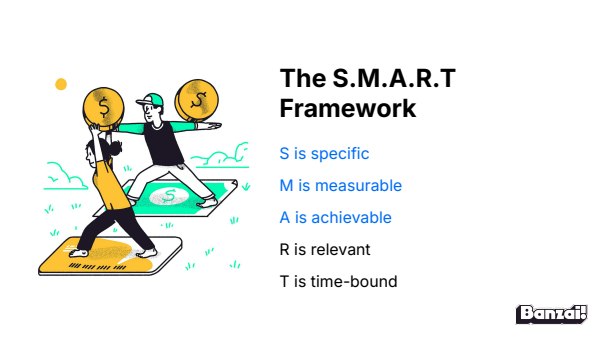
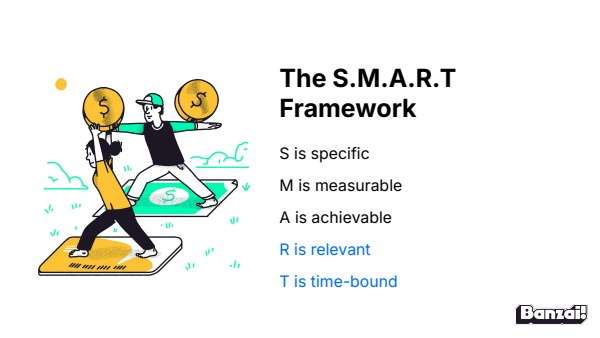
- Introduce the S.M.A.R.T. acronym.
- Use backward mapping to break a financial goal into smaller amounts.
Activity: S.M.A.R.T. Worksheet
- List potential goal areas.
- Create a list of S.M.A.R.T. goals.
Discussion: Now vs. Later
- Divide the class into Team Now and Team Later.
- Present a $150 limited-drop scenario and have each side argue their case.
- Debrief by contrasting impulse spending to saving with a purpose.
Wrap-Up & Assessment
- Name all five S.M.A.R.T. words.
- Turn “ I want to save money to buy a car” into a full S.M.A.R.T. goal.
| Est. Time | Activity | Description |
|---|---|---|
| 5 min | Bellringer: Goal or Dream? |
|
| 10 min | Instruction |
|
| 15 min | Activity: S.M.A.R.T. Worksheet |
|
| 10 min | Discussion: Now vs. Later |
|
| 5 min | Wrap-Up & Assessment |
|
Lesson Prep

S.M.A.R.T. Saving Goals Worksheet
Students will set and refine one short-term and one long-term savings goal using the S.M.A.R.T. framework.
Class Presentation
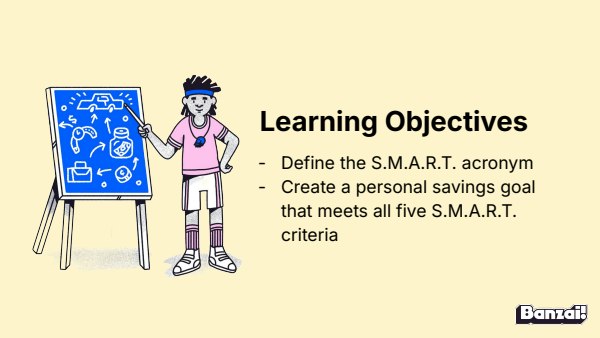
Includes a 17-slide deck with teacher notes. Present from Banzai, download a PDF, or copy it to Google Slides.





Presentations, Ready to Go
- Built-in PresentationPresent full screen, straight from Banzai
- Copy to Google SlidesMake an editable copy for your class
- Download or PrintSave as a PDF or print
- Teacher NotesSlide-by-slide guidance, printable as one handout
Unit 1: Money Mindsets

Opportunity Cost
Every choice has a hidden cost, called the opportunity cost. In this lesson, students evaluate trade-offs by identifying the next-best alternative they give up when making a decision.

Setting S.M.A.R.T. Goals
A goal without a plan is just a wish, and most wishes don't come with price tags. This lesson introduces the S.M.A.R.T. goal framework and connects it to real savings strategies so students can turn vague financial intentions into actionable plans.

The Psychology of Spending
The brain uses shortcuts to make faster decisions, which can impact financial decisions. Students learn about biases like social proof and decision fatigue which can sabotage financial goals.
How do Banzai lesson plans work? See the FAQ.