
Lesson
The Psychology of Spending
Summary
The brain uses shortcuts to make faster decisions, which can impact financial decisions. Students learn about biases like social proof and decision fatigue which can sabotage financial goals.
Bellringer: Now or Later?
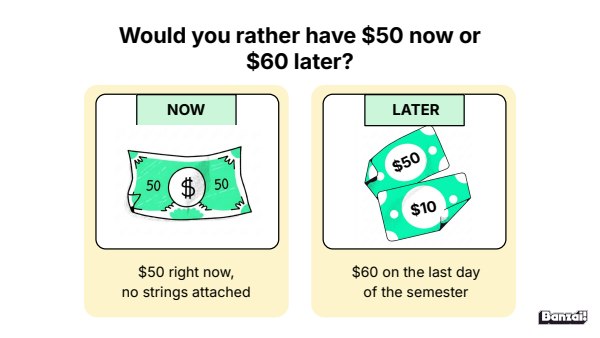
- Students choose between $50 now or $60 at end of semester and explain their reasoning.
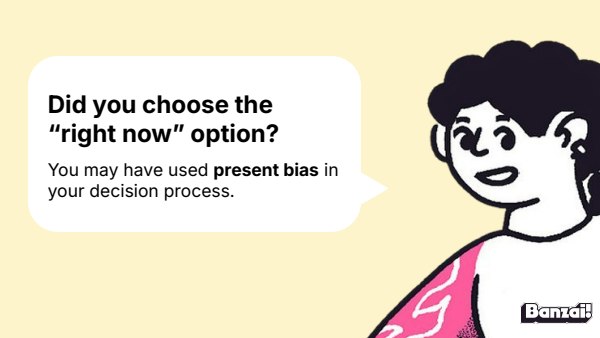
- Reveal present bias as the first cognitive shortcut.
Instruction
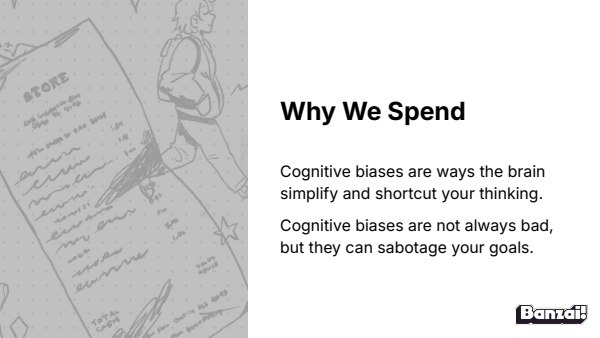
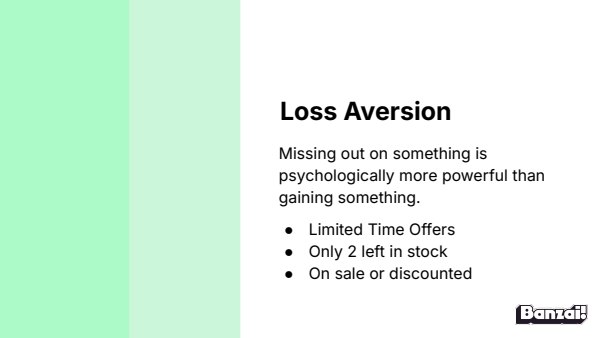
- Define cognitive biases as mental shortcuts, then walk through loss aversion, decision fatigue, and social proof with real-world examples.
- Invite students to share their own examples of each bias.
Discussion: Spot the Bias
- Recall a recent purchase over $20 and identify whether values, scarcity, or social proof drove it.
- Brainstorm hacks for resisting these influences.
Activity: Retail Therapy
- Read the Retail Therapy article individually or as a class.
- Assign the Retail Therapy Check-In worksheet
Wrap-Up & Assessment
- Explain one bias we discussed today.
- Create one "rule" for yourself that would help you avoid that bias.
| Est. Time | Activity | Description |
|---|---|---|
| 5 min | Bellringer: Now or Later? |
|
| 10 min | Instruction |
|
| 5 min | Discussion: Spot the Bias |
|
| 20 min | Activity: Retail Therapy |
|
| 5 min | Wrap-Up & Assessment |
|
Lesson Prep

Retail Therapy
If spending money is the main way you cope with stressful or negative emotions, you may be putting your financial health at risk

Retail Therapy Check-In
Students will reflect on their own spending habits, identify emotional triggers behind unplanned purchases, and brainstorm free alternatives for managing stress or low mood without shopping.
Class Presentation
Includes a 15-slide deck with teacher notes. Present from Banzai, download a PDF, or copy it to Google Slides.
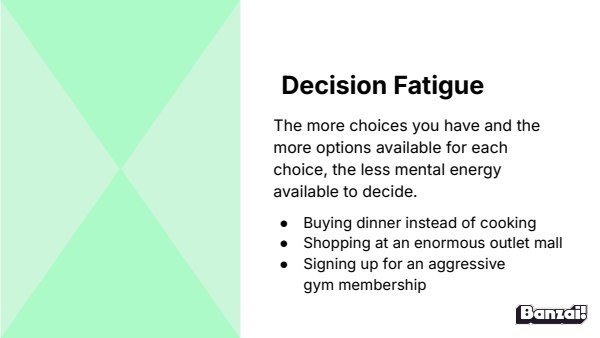
Presentations, Ready to Go
- Built-in PresentationPresent full screen, straight from Banzai
- Copy to Google SlidesMake an editable copy for your class
- Download or PrintSave as a PDF or print
- Teacher NotesSlide-by-slide guidance, printable as one handout
Unit 1: Money Mindsets

Opportunity Cost
Every choice has a hidden cost, called the opportunity cost. In this lesson, students evaluate trade-offs by identifying the next-best alternative they give up when making a decision.

Setting S.M.A.R.T. Goals
A goal without a plan is just a wish, and most wishes don't come with price tags. This lesson introduces the S.M.A.R.T. goal framework and connects it to real savings strategies so students can turn vague financial intentions into actionable plans.

The Psychology of Spending
The brain uses shortcuts to make faster decisions, which can impact financial decisions. Students learn about biases like social proof and decision fatigue which can sabotage financial goals.
How do Banzai lesson plans work? See the FAQ.